

1300 – 1386 (Solar Hijri)
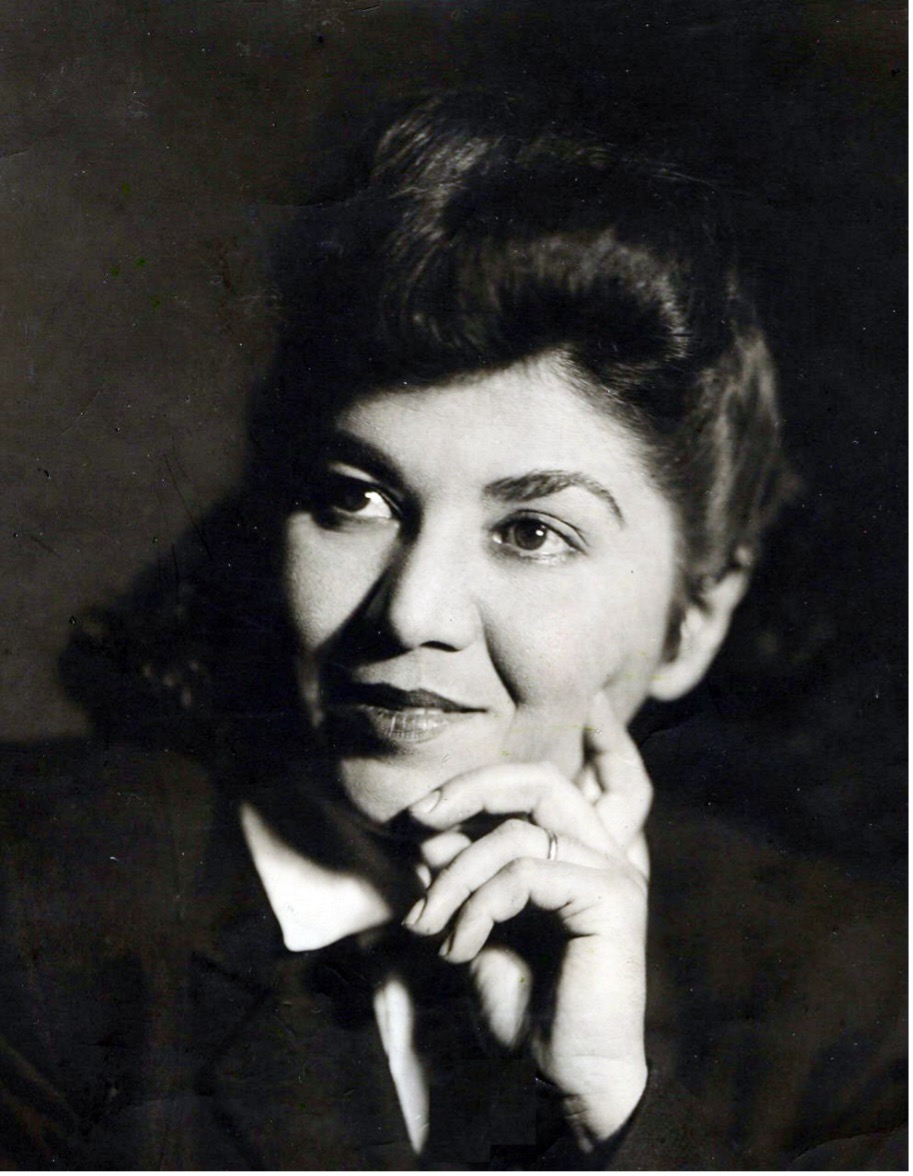
Jaleh Esfahani
«خوشا روزگاری که ما بار دیگر
ببینیم شادیکنان همدگر را
بخندیم و با ریزش اشکهایمان
بشوییم با گریه گَردِ سفر را»
Introduction
In one of the months of the year 1300 (Solar Hijri), on Sheikh Baha'i Street, in Majles Alley, in a large old house, a child was born whose parents disagreed over her name. Her mother, Monavar Khanom, liked the name "Jaleh," while her father wanted the English name "Ethel," in memory of an English nurse from a hospital.
In the end, Aqajan Soltani succeeded in having the name "Ethel" registered on her birth certificate, and this unchangeable name — foreign to its bearer — remained above her hospital bed until the final days of her life, receiving visitors.
The name "Jaleh" was used as her pen name in the very first poem she wrote at age 13, and the same name was used for the poetry collection Gol-haye Khodrow (Wildflowers), published in Tehran when the poet was 23. Her name as an Iranian woman poet was always a matter of tension: "Ethel – Jaleh – Soltani." After her marriage and involuntary migration to the former Soviet Union, she became known as "Jaleh Badi' Tabrizi," then "Jaleh Badi'," and in Afghanistan as "Jaleh Zendehroudi."
In 1325 (Solar Hijri), before her journey of no return, at the Second Congress of Iranian Writers and Poets — a fact documented and confirmed by the poet herself — this same name was recorded in the book Poets of Isfahan, and, in her own words, it was enough for both her life and her death.
Childhood and Family
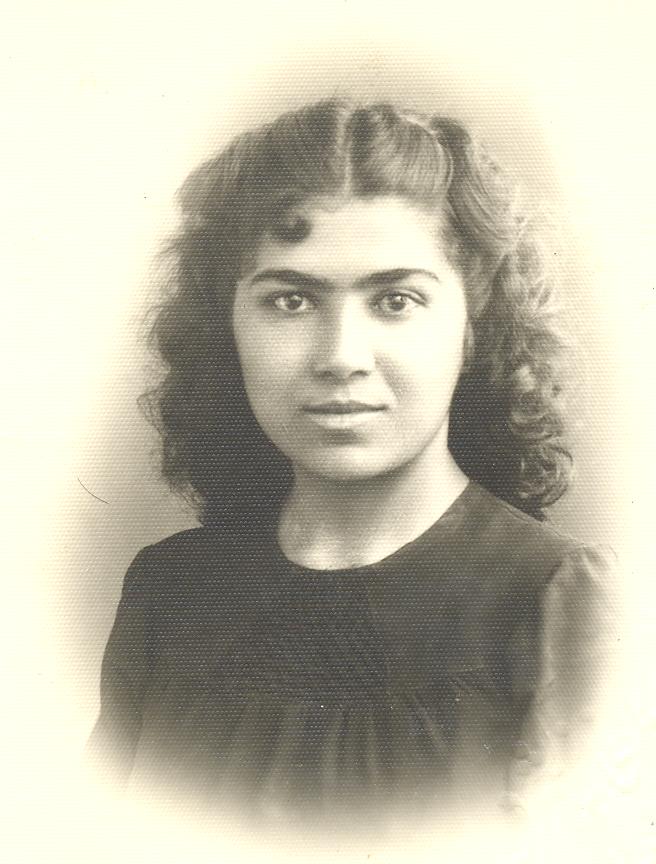
Jaleh as a teenager
Jaleh's childhood unfolded amid very complex and contradictory circumstances. Her mother was a wealthy, strong-minded woman who wanted Jaleh and her sister Nosrat to receive an education. But Jaleh's father, Aqajan Soltani, opposed educating girls. In the end, Monavar Khanom succeeded in enrolling Jaleh and Nosrat at the Beheshtaeen School in Isfahan.
Jaleh completed second and third grade in a single year, and to prove to her father that girls deserved an education, she worked with great effort and diligence, always ranking among the top students. She also excelled in sports, and beyond that, developed a keen ability to make friends and understand the social realities of an era marked by poverty, superstition, and contradiction.
Education, Youth, and Entering Society
Her years at Beheshtaeen, under the kind administration of a woman named "Miss Aidin" — who had an Iranian mother and an Armenian father — came to an end. The girls scattered, each pursuing her own path. Jaleh, however, could not settle quietly at home. Even so, when Miss Aidin suggested she teach at Beheshtaeen, she turned down the offer.
In that era, young people from Isfahan's middle class took up learning musical instruments — both Eastern and Western — formed close friendships with young women, went on picnics together, and pursued similar pastimes. Together with a close friend, she also rode by carriage to Jolfa twice a week to learn various European dances from French instructors.
During her time at Beheshtaeen, Jaleh also began writing prose, in which the shadow of years of memory can be traced. Reading the Shahnameh, love poetry by other contemporary poets, and reciting verse with family members drew her closer to the world of poetry. Among the earliest poems she wrote, shaped by this influence, was one later published in Gol-haye Khodrow:
چه سخت میگذرد آه، زندگانی من
چه پر شرّ و شور است این جوانی من
در ابتدای جوانی فداهام به نفس
کجاست موسم پرواز و بالگشایی من؟
From a few surviving writings of her youth, it appears that from the very start of her writing career Jaleh experienced intense inner conflict, arising from great aspirations set against the realities of life.
Jaleh's departure from Beheshtaeen coincided with the rise of Reza Shah and reforms to Iran's administrative system. She had hoped to attend Tehran University to study the field of her choosing, but lacked the necessary qualifications. So when a newspaper advertisement announced that "National Bank is hiring diploma holders," she applied along with her friend Maliheh, and both began working there.
Beyond her office work, Jaleh pursued other interests: attending an English-language institute, joining a Shakespeare-reading class, letter-writing, playing tennis, playing the violin, and cycling around the city of Isfahan. Her poetry, too, began reaching beyond her circle of acquaintances, and newspapers occasionally asked her for a new poem or article.
Marriage, Literary Activity, and Involuntary Migration
In 1322 (Solar Hijri), at a language institute in Isfahan, Jaleh met an air force officer named Shamsoddin Badi'. They soon discovered they shared a common goal: Iran and its freedom. They decided to marry. A simple wedding was held, and Jaleh moved to Tehran with her husband.
In Tehran, she took a position in the Foreign Department of the National Bank, but writing and publishing poetry remained her greatest passion. It was during this period that her first book, Gol-haye Khodrow, was printed in a run of 1,000 copies. At the bank, Jaleh worked alongside Aliyeh Jahangir, the wife of Nima Yushij, and through her came to know Nima, growing close to him.
Conditions following Reza Shah's departure led to the rise of numerous political parties and groups, street demonstrations, and public gatherings. Even so, Jaleh enrolled at Nurbakhsh High School to complete her final year of literature classes; she sat the examinations, became a favorite of her professor, and gained admission.
In 1325 (Solar Hijri), the First Congress of Iranian Writers was held with cultural backing from Iran and the Soviet Union. Mostashar al-Dowleh chaired the organizing committee. Attendees included the Minister of Culture and congress chairman Ali-Asghar Hekmat, Dr. Natel Khanlari, Parviz Khanlari, Dr. Fatemeh Sayyah, Ehsan Tabari, Ali-Akbar Dehkhoda, Forouzanfar, the writer Sadegh Hedayat, Karim Keshavarz, Soroor Mohammadi Ma'soum, and roughly 80 other poets and writers, along with the Soviet ambassador, the celebrated Russian poets Alexei Surkov and Vera Inber, and Professor Aref Dadashzadeh from Azerbaijan.
At this congress, Jaleh read two poems, "Violet" and "Iran," which drew the audience's attention. Afterward, she became more deeply connected to Tehran's literary and cultural circles, and around this time also began studying Arabic under Shams's father, himself an intellectual figure.
These years coincided with the events in Azerbaijan. Shams and a group of officers set out for Azerbaijan. In early autumn of 1325, Shams asked Jaleh to move to Tabriz as soon as possible so she could continue her studies at Tabriz University while near him. After arriving in Tabriz, Jaleh found herself amid the advance of the central army and the flight of the Democrat Party's leaders — a consequence of Soviet intervention and coups — and after a brief stay, she crossed the border along with members of the Tudeh Party and their families. This marked the end of Jaleh's life in Iran.
On the other side of the border, weeks of uncertainty followed, until she and her husband, together with the spouses of other émigrés, realized there was no way back. They were moved from one house to another until, finally, they were settled along with others in a single location.
The Moscow Years: Study, Research, and a Growing Cultural Standing
The leaders of the Tudeh and Democrat parties arranged compulsory study or work assignments for each émigré; it was decided that Jaleh would enroll at Azerbaijan University to continue her studies. The first days and weeks were very difficult, but Jaleh persevered, eventually mastering the Azeri language to an academic level and earning a master's degree in literature. Throughout this hard period of exile, her poetry was her only refuge from bitterness and homesickness.
Over her nine years in Azerbaijan, she not only studied but also gave birth to her first child. Throughout these years she continued writing poetry and chose as her thesis topic "The Image of Shirin in Nezami Ganjavi's Tale of Khosrow and Shirin." At her students' suggestion, she also translated thousands of verses by early and contemporary Azeri poets into Persian, compiling them into a collection that was being prepared for publication.
Jaleh was constantly striving and active, and even under the hardest circumstances of life as an outsider, she carried a spirit of resistance through her poetry. In 1328 (Solar Hijri), Jaleh wrote a poem titled "Mothers Want Peace," which reached Tajikistan through one of the Iranian émigrés and caught the attention of Sadriddin Ayni, the founder of modern Tajik literature, who invited her to that land. Though she had just given birth to her second child, Jaleh received a warm welcome following the invitation and decided to go to Moscow — a decision that would eventually, unexpectedly, lead to her settling in that city.
Determination carried her through the hardest stages of life. Despite having a young child, she enrolled at a university in Moscow and once again took on the challenge of learning a new language. She reached the final stage of her studies, gave birth to another child, and amid the difficult postwar conditions in Russia, the family eventually found suitable work and, after years of hardship, achieved a relatively stable life.
Jaleh's fighting spirit, her hope for a better life, and her poetry — imbued with deep feeling — gradually found their way into respected Russian literary publications. She came to be seen as a cultural representative of Iranians and, in effect, a cultural ambassador of the Soviet Union.
Her doctoral dissertation focused on the work of the great Iranian poet Malek al-Sho'ara Bahar, written first in Persian and then in Russian. During this period, Jaleh, alongside numerous poets and writers, conducted research at the Soviet Academy of Sciences' Institute of World Literature — particularly on modern poetry and questions of the press — and built deep ties with Persian speakers in Tajikistan.
In 1965, Jaleh became a member of the All-Union Writers' Union of the Soviet Union, despite never having accepted Soviet citizenship — an exceptional case. Her literary research at the Soviet Academy of Sciences' Institute of World Literature, especially on modern poetry, was published, part of it in Persian and Russian; several collections of her poems were also rendered into the languages of Soviet nations, particularly Tajik, further deepening her connection to Persian speakers.
In the 1960s, Jaleh became acquainted with Iranian literary figures such as Bahram [name unclear in source], Mohammad Mo'in, Natel Khanlari, Abdolhossein Noushin, Abolqasem Lahouti, Dr. Sooratgar, and many others, who greatly influenced and enriched her poetry.
The 1970s were filled with political and social upheaval that, despite her distance from Iran, did not leave Jaleh untouched. Early in the decade, the Association of Political Refugees Resident in the Soviet Union, headed by Nosratollah [surname unclear in source], gave dignified voice to Iranian émigrés' feelings toward their homeland. Under the first article of the association's statement, it was decided that Jaleh would take charge of the association of Iranian refugees resident in Moscow.
Return to Iran, and Later Life in London
Political events in Iran and the outbreak of the revolution made Jaleh determined to return home, and finally, after 32 years away, she set off for Iran in September 1980. Arriving at Mehrabad Airport and seeing relatives and old acquaintances was among the moments that moved her most deeply; she captured and described those moments in a poem:
خوشا روزگاری که ما بار دیگر
ببینیم شادیکنان همدگر را
بخندیم و با ریزش اشکهایمان
بشوییم با گریهٔ گَرد سفر را
Jaleh did not remain in Iran for much more than a year. Years of absence, changed circumstances, political and social upheaval, and the outbreak of war all made her realize that this homeland was no longer the one she had carried in her memory for so long — the one she had written and composed poetry for, and wept over.
Jaleh did not stay in Iran for more than a year or so. Years of absence, changed circumstances, political and social upheaval, and the outbreak of war all led her to the same realization: this was no longer the homeland she remembered and had devoted her writing to. Despite reconnecting with contemporary poets and writers, and having her poems published both in books and in periodicals, she ultimately concluded that she could not bear the hardship of the conditions there.
In addition, being separated from her children caused her great pain. And so, in February 1982, she once again resolved to travel, leaving Iran for England.
London became the place where she lived out her final years. It was in this city that she published the greatest share of her work. Jaleh's home there became a gathering place for visits, conversation, and literary and artistic activity, including poetry readings. Through mentoring and guiding younger poets, she also set her own memories down in writing, which were later published.
Biography of Jaleh Esfahani
-
1300 – 1315
Childhood and Family
Born into a culture-loving family in Isfahan.
-
1315 – 1325
Education, Youth, and Entering Society
Schooling, office work, and artistic pursuits from adolescence onward.
-
1322 – 1334
Marriage, Literary Activity, and Involuntary Migration
Marriage and the beginning of an involuntary migration to Azerbaijan.
-
1334 – 1359
The Moscow Years: Study, Research, and a Growing Cultural Standing
Study through to a doctorate and the establishment of her literary standing in Moscow's cultural circles.
-
1359 – 1386 (end of life)
Return to Iran, and Later Life in London
A brief return to Iran, followed by a prolific literary period in London.